
Review of the seminal 2017 paper Attention is all you need. These paper introducea the Transformer architecture, a dominant model in natural language processing that relies entirely on multi-head attention instead of recurrent or convolutional networks. The first paper, "Attention Is All You Need," introduces the Transformer, showcasing its superior performance and training efficiency in machine translation and constituency parsing. The subsequent papers, "Analyzing Multi-Head Self-Attention" and "Are Sixteen Heads Really Better than One?", investigate the importance and interpretability of individual attention heads within the Transformer. Both studies surprisingly conclude that a significant portion of attention heads can be removed without substantially impacting performance, revealing that many heads are redundant and that specialized heads perform the most critical functions, particularly in encoder-decoder attention.
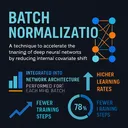
This academic paper introduces Batch Normalization (BN), a novel technique designed to accelerate the training of Deep Neural Networks (DNNs) by addressing the issue of internal covariate shift. Internal covariate shift refers to the phenomenon where the distribution of inputs to each layer changes during training, slowing down the learning process and making it difficult to train models with certain non-linearities. The authors propose integrating normalization directly into the network architecture, performing it for each training mini-batch, which allows for higher learning rates and less careful parameter initialization. Experiments, particularly with image classification on the ImageNet dataset, demonstrate that Batch Normalization significantly reduces the number of training steps required to achieve competitive accuracy and can even improve upon state-of-the-art results, while also acting as a regularizer, potentially reducing the need for dropout.

Review of the 2017 paper "BERT: Pre-training of Deep Bidirectional Transformers for Language Understanding", leveraging the transformer architecture, by Google. This paper introduces BERT (Bidirectional Encoder Representations from Transformers), a novel language representation model designed for pre-training deep bidirectional representations from unlabeled text. Unlike prior models that process text unidirectionally, BERT conditions on both left and right context in all layers, enabling it to achieve state-of-the-art results across eleven natural language processing (NLP) tasks, including question answering and language inference. The model utilizes two primary pre-training tasks: Masked LM for bidirectional learning and Next Sentence Prediction to understand sentence relationships. The authors demonstrate that this bidirectional approach, coupled with fine-tuning the pre-trained model for specific tasks, significantly outperforms previous methods, even with minimal task-specific architectural modifications.
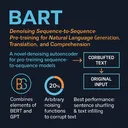
Review of the 2019 pun titled paper "BART: Denoising Sequence-to-Sequence Pre-training for Natural Language Generation, Translation, and Comprehension" by the folks at Facebook. This research introduces BART, a novel denoising autoencoder designed for pre-training sequence-to-sequence models, which proves effective for various natural language processing tasks, including generation, translation, and comprehension. BART distinguishes itself by corrupting text with arbitrary noising functions and learning to reconstruct the original input, combining elements of existing models like BERT and GPT. The study evaluates different noising strategies, finding that random sentence shuffling and a text-infilling scheme yield the best performance. Results indicate BART performs comparably to state-of-the-art models on classification tasks while achieving new benchmarks in text generation for abstractive dialogue, question answering, and summarization. Furthermore, the paper demonstrates BART's utility in enhancing machine translation decoders, offering a flexible and robust pre-training framework.

This paper provides an overview of Chamfer Matching, a classical image registration method primarily used for segmented features. They explain its theoretical underpinnings, including its reliance on distance transforms, cost functions, and optimization algorithms. The texts highlight its applications, particularly in medical imaging for radiotherapy, where it aids in treatment verification, planning, and quantifying organ motion. Additionally, the sources touch upon its use in computer vision for object detection, such as pedestrian tracking, while acknowledging its strengths and limitations regarding factors like accuracy, speed, and robustness to image quality and outliers.
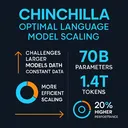
The Chinchilla research by DeepMind investigates the optimal model size and training tokens for large language models, aiming to maximize performance within a fixed computational budget. They challenge prior beliefs by demonstrating that model size and training data should scale proportionally, not primarily focusing on larger models with constant data. Their new model, Chinchilla, with 70 billion parameters and trained on 1.4 trillion tokens, significantly outperforms much larger models like Gopher (280 billion parameters) that were trained on less data. This finding suggests that current large language models are undertrained and that more efficient scaling can lead to improved performance and reduced inference costs, highlighting the critical role of dataset scaling and quality in future advancements.
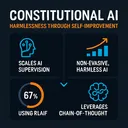
This paper details "Constitutional AI," a novel method for training AI assistants to be harmless without extensive human-labeled data for harmful outputs. This approach involves a supervised learning phase, where an AI critiques and revises its own responses based on a set of pre-defined principles or a "constitution." Following this, a reinforcement learning (RL) phase uses AI-generated feedback to train a preference model, which then guides the AI to produce more desirable outputs, a process referred to as "RL from AI Feedback" (RLAIF). The key motivations behind this method include scaling AI supervision, creating a non-evasive yet harmless AI, and improving transparency in AI decision-making by leveraging chain-of-thought reasoning. Ultimately, Constitutional AI aims to achieve precise control over AI behavior with significantly less direct human oversight.
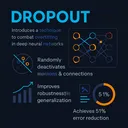
This 2014 journal article introduces "Dropout", a novel technique designed to combat overfitting in deep neural networks, which are powerful but prone to memorizing training data. The core concept involves randomly deactivating a subset of neurons and their connections during the training phase, which prevents hidden units from overly relying on each other. This process effectively trains an exponential number of "thinned" networks, improving the model's robustness and generalization to new data. The authors demonstrate that dropout significantly enhances performance across diverse applications, including image recognition, speech processing, and document classification, often achieving state-of-the-art results by producing more meaningful and sparse features. The paper also compares dropout to other regularization methods, explores its impact on network behavior, and discusses its extension to Restricted Boltzmann Machines, highlighting its general applicability as a method for model averaging. Source: https://arxiv.org/pdf/1207.0580
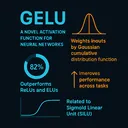
This 2023 paper Gaussian Error Linear Units (GELUs), a novel activation function for neural networks that outperforms traditional activations like Rectified Linear Units (ReLUs) and Exponential Linear Units (ELUs) across various tasks. GELUs operate by weighting inputs by their value using the standard Gaussian cumulative distribution function, providing a probabilistic interpretation unlike the sign-based gating of ReLUs. Empirical evaluations demonstrate consistent performance improvements in computer vision, natural language processing, and speech recognition tasks. The paper also discusses the historical context and challenges of credit assignment for a related activation function, the Sigmoid Linear Unit (SiLU), which was independently rediscovered and mislabeled as "swish" by other research groups. Ultimately, GELUs have gained prominence as a default activation in advanced Transformer models, indicating their significant impact on deep learning.
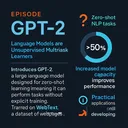
This 2019 paper, "Language Models are Unsupervised Multitask Learners," introduces GPT-2, a large language model designed for zero-shot learning, meaning it can perform tasks without explicit, task-specific training. The research highlights the model's ability to learn various natural language processing (NLP) tasks, such as question answering, summarization, and translation, by being trained on a diverse and extensive dataset called WebText, composed of millions of high-quality webpages. The paper demonstrates that increasing the model's capacity significantly improves performance across these tasks, often achieving state-of-the-art results in a zero-shot setting. While showing promising results, the authors acknowledge that GPT-2's practical applications are still developing, particularly in areas like summarization and translation where performance remains rudimentary compared to human benchmarks
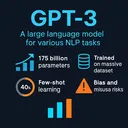
This 2020 paper outlines the development and evaluation of GPT-3, a large language model, exploring its performance across various natural language processing tasks under zero-shot, one-shot, and few-shot learning conditions, which involve providing minimal to no task-specific examples during inference. It details the model's architecture, training methodology, including its use of a massive dataset, and analyzes its limitations and broader impacts, such as the potential for misuse and the presence of biases related to gender, race, and religion inherited from its training data. The document also discusses the challenges of data contamination and the computational resources required for training such a large model.

This paper introduces Grouped-Query Attention (GQA), a novel approach designed to enhance the inference efficiency of large language models. It addresses the limitations of Multi-Query Attention (MQA), which, while fast, can compromise model quality, and Multi-Head Attention (MHA), which offers high quality but is slower due to memory bandwidth overhead. The authors propose uptraining existing MHA models to either MQA or GQA with minimal additional computational cost. GQA acts as an interpolation between MHA and MQA, utilizing an intermediate number of key-value heads to strike a balance, achieving near-MHA quality with speeds comparable to MQA, making it a favorable trade-off for larger models.
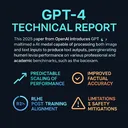
This 2023 paper, GPT-4 Technical Report from OpenAI introduces GPT-4, a multimodal AI model capable of processing both image and text inputs to produce text outputs, demonstrating human-level performance on various professional and academic benchmarks, such as the bar exam. The report highlights the predictable scaling of the model's performance and its improved factual accuracy and adherence to desired behaviors achieved through post-training alignment processes like Reinforcement Learning from Human Feedback (RLHF). It also addresses the model's limitations, including "hallucinations" and potential for misuse, detailing the safety evaluations and mitigation strategies implemented to reduce harmful outputs.
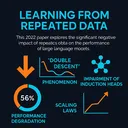
This 2022 paper explores the significant negative impact of repeated data on the performance of large language models, even when such repetitions constitute a small fraction of the total training data. The authors observe a "double descent" phenomenon, where model performance initially improves, then degrades at a specific repetition frequency, and finally improves again with excessive repetition, suggesting a trade-off between generalization and memorization. This performance degradation is disproportionately linked to the impairment of the model's copying ability and crucial internal structures called induction heads, which are vital for in-context learning. The study bridges scaling laws—predictable relationships between hyperparameters and performance—with mechanistic interpretability, aiming to understand how these microscopic changes in the model's internal computations lead to macroscopic performance shifts. Ultimately, the research offers practical insights for diagnosing and mitigating data-repetition issues in large language model training, highlighting how repeated data can hinder effective generalization.
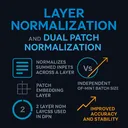
The first source introduces Layer Normalization (LN), a technique designed to accelerate and stabilize the training of deep neural networks, particularly recurrent neural networks, by normalizing summed inputs across a layer for each training case. It contrasts LN with Batch Normalization, highlighting LN's independence from mini-batch size and its consistent computation during both training and testing. The second source, published later, builds upon this foundation by proposing Dual PatchNorm (DPN) for Vision Transformers (ViTs). DPN involves applying two Layer Normalization layers – one before and one after the patch embedding layer – demonstrating improved accuracy and training stability across various computer vision tasks. This subsequent research indicates that while traditional Layer Normalization placements within the Transformer block are effective, additional normalization in the initial patch embedding stage yields further benefits.
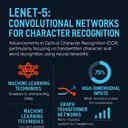
This paper outlines the advancements in Optical Character Recognition (OCR), particularly focusing on handwritten character and word recognition using Neural Networks. The authors, affiliated with AT&T Labs-Research, detail various machine learning techniques, including Gradient-Based Learning and Convolutional Neural Networks (CNNs) like LeNet-5, highlighting their effectiveness in handling high-dimensional inputs and generating intricate decision functions. A significant portion of the paper is dedicated to Graph Transformer Networks (GTNs), a multi-module system designed to interpret sequences of characters by leveraging graph-based representations and global training methods to reduce errors. The paper also describes the creation and use of the MNIST dataset, a benchmark for handwritten digit recognition, and discusses the practical application of these technologies in commercial check reading systems and online handwriting recognition.
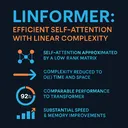
This academic paper introduces Linformer, a novel approach to address the computational bottleneck of Transformer models in natural language processing. The authors demonstrate that the self-attention mechanism, which is a core component of Transformers and typically incurs quadratic time and space complexity with respect to sequence length, can be approximated by a low-rank matrix. By exploiting this finding, the Linformer reduces this complexity to linear time and space (O(n)), making it significantly more efficient for long sequences. The research provides both theoretical proofs and empirical evidence that the Linformer performs comparably to standard Transformers while offering substantial speed and memory improvements during both training and inference.

This paper introduces Longformer, a novel Transformer-based model designed to overcome the limitations of traditional Transformers in processing exceptionally long sequences. Unlike prior models with quadratic scaling, Longformer employs an attention mechanism that scales linearly with sequence length, making it efficient for documents containing thousands of tokens. This innovative architecture combines local windowed attention with task-motivated global attention, enhancing its ability to capture both immediate and overarching contextual information. The authors demonstrate Longformer's superior performance in character-level language modeling and its effectiveness across various downstream natural language processing (NLP) tasks, including question answering and coreference resolution. Furthermore, they present Longformer-Encoder-Decoder (LED), a variant for sequence-to-sequence tasks, showcasing its proficiency in long document summarization.
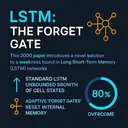
This 2000 paper introduces a novel solution to a weakness found in Long Short-Term Memory (LSTM) networks, specifically when processing continuous data streams without predefined segmentation. The core problem addressed is the unbounded growth of internal cell states within standard LSTM networks, which can lead to performance degradation. The authors propose and implement "forget gates", an adaptive mechanism that allows LSTM cells to learn when to reset their internal memory at appropriate times, thus managing resources effectively. Through experiments with complex, continual versions of benchmark problems, the paper demonstrates that LSTMs equipped with these forget gates successfully overcome limitations faced by standard LSTMs and other recurrent neural networks. Ultimately, the work highlights the importance of adaptive forgetting for neural networks dealing with ongoing, unsegmented input.
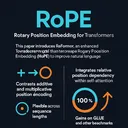
This paper introduces RoFormer, an enhanced Transformer model that leverages Rotary Position Embedding (RoPE) to improve natural language processing tasks. The authors explore existing methods for incorporating positional information into Transformer architectures, contrasting traditional additive position encoding with their novel multiplicative approach. RoPE encodes absolute position through a rotation matrix while explicitly integrating relative position dependency within the self-attention mechanism, offering benefits such as flexibility in sequence length and decaying inter-token dependency over distance. Experimental results across machine translation, pre-training language models, and fine-tuning on GLUE benchmarks, including long text and Chinese datasets, consistently demonstrate RoFormer's superior performance and faster convergence compared to alternative models. The paper also provides a theoretical derivation and properties of RoPE, despite acknowledging some limitations in fully explaining certain empirical observations.
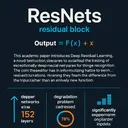
What ResNet introduced is adding the input of a block directly to its output, like this: Output = 𝐹(𝑥)+ 𝑥 This academic paper introduces Deep Residual Learning, a novel framework designed to facilitate the training of exceptionally deep neural networks for image recognition. The core innovation lies in reformulating layers to learn residual functions, meaning they learn the difference from the input rather than an entirely new function. This approach effectively addresses the degradation problem, where increasing network depth paradoxically leads to higher training error, allowing for the creation of networks up to 152 layers deep, significantly outperforming shallower models. The authors demonstrate the efficacy of their Residual Networks (ResNets) across various image recognition tasks, securing first place in multiple ILSVRC and COCO 2015 competitions for classification, detection, and localization, proving the generalizability and power of their method.
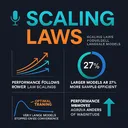
This 2000 paper, titled "Scaling Laws for Neural Language Models," explores the empirical relationships between the performance of neural language models (specifically Transformers) and various scaling factors: model size (parameters), dataset size (tokens), and computational budget (compute used for training). The authors demonstrate that model performance follows predictable power-law scalings across a wide range, often spanning multiple orders of magnitude. A key finding is that larger models are more sample-efficient, meaning they can achieve similar performance with less data and fewer training steps, suggesting that optimal compute-efficient training involves very large models that are stopped before full convergence. The research also notes that architectural details beyond these core scaling factors have minimal impact on performance.
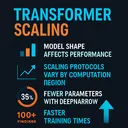
This research paper explores the scaling behavior of Transformer architectures, offering insights into pre-training and fine-tuning efficiency. It challenges previous findings by demonstrating that model shape, not just size, significantly impacts downstream task performance, unlike its lesser effect on upstream pre-training loss. The study also reveals that scaling protocols vary in effectiveness across different computational regions, implying that strategies optimized for smaller models may not translate to larger ones. The authors propose a "DeepNarrow" scaling strategy that prioritizes increasing model depth, leading to models with fewer parameters and faster training times while maintaining or improving performance compared to conventional configurations. These findings and over 100 pre-trained checkpoints are openly released to facilitate further research into efficient Transformer scaling.
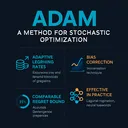
This reviews the 2015 paper which introduced Adam, an algorithm for first-order gradient-based optimization in scenarios involving stochastic objective functions. Adam uniquely computes adaptive learning rates for different parameters by estimating the first and second moments of gradients, offering advantages in computational efficiency and memory requirements. The paper details Adam's algorithm, its initialization bias correction technique, and analyzes its theoretical convergence properties, demonstrating a comparable regret bound to existing methods. Empirical results across various machine learning models, including logistic regression and neural networks, showcase Adam's practical effectiveness and robustness in large-scale, high-dimensional problems, even introduci
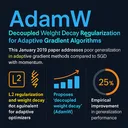
The paper "Decoupled Weight Decay Regularization" by Ilya Loshchilov and Frank Hutter (2017) introduced what we know in Pytorch now as AdamW. This academic paper explores the differences between L2 regularization and weight decay regularization in optimizing neural networks, particularly focusing on adaptive gradient algorithms like Adam. The authors demonstrate that while these two regularization methods are equivalent for standard stochastic gradient descent (SGD), they are not equivalent for Adam, leading to suboptimal generalization performance in common Adam implementations. They propose a decoupled weight decay method, termed AdamW, which substantially improves Adam's generalization and allows its performance to rival SGD with momentum on image classification tasks. The paper also introduces normalized weight decay and discusses the integration of warm restarts for improved performance and hyperparameter tuning.

The provided text, titled "AI and Memory Wall," examines the growing disparity between computational power and memory bandwidth in AI, particularly for Large Language Models (LLMs). It highlights how server hardware FLOPS (floating-point operations per second) have dramatically outpaced DRAM (Dynamic Random-Access Memory) and interconnect bandwidth growth over the past two decades, leading to a "memory wall" where data transfer becomes the primary bottleneck rather than processing speed. The article details how this issue specifically impacts decoder Transformer models like GPT-2 due to their higher memory operations and lower arithmetic intensity. Ultimately, it proposes solutions spanning model architecture redesign, efficient training algorithms, deployment strategies like quantization and pruning, and rethinking AI accelerator hardware to overcome these memory limitations. Source: 2024 - https://arxiv.org/pdf/2403.14123 - AI and Memory Wall
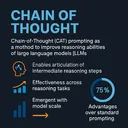
This reviews two papers on Chain of Thought: 1) https://arxiv.org/pdf/2201.11903 - Chain-of-Thought Prompting Elicits Reasoning in Large Language Models 2) https://arxiv.org/pdf/2503.11926 - Monitoring Reasoning Models for Misbehavior and the Risks of Promoting Obfuscation These papers introduce Chain-of-Thought (CoT) prompting as a method to improve the reasoning abilities of large language models (LLMs) by enabling them to articulate intermediate reasoning steps. The first source introduces CoT prompting, demonstrating its effectiveness in various reasoning tasks (arithmetic, common sense, symbolic) and highlighting its emergent capability with increased model scale. It also explores the robustness of CoT prompting and its advantages over standard prompting. The second source examines reward hacking in AI systems and proposes using CoT as a monitoring mechanism to detect and potentially mitigate misaligned behaviors, suggesting that naturally understandable reasoning traces can reveal the agent's decision-making process. However, it also acknowledges the risk of obfuscation where LLMs might learn to conceal their true intentions to bypass such monitors, emphasizing the ongoing challenge of AI alignment.
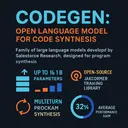
This source introduces CODEGEN, a family of large language models developed by Salesforce Research, designed for program synthesis. The models, varying in size up to 16.1B parameters, are trained on extensive natural language and programming language datasets, and the training library, JAXFORMER, is open-sourced to promote accessibility. A key contribution is the exploration of multi-turn program synthesis, where complex problems are broken into smaller, interactable steps, enhancing user intent understanding and synthesis accuracy. To evaluate this, the authors created Multi-Turn Programming Benchmark (MTPB), demonstrating that multi-turn prompting significantly improves performance over single-turn specifications, particularly for more challenging problems. The research highlights the scalability of program synthesis capacity with increasing model and data size, making powerful code generation more attainable for wider research and application. Source: 2023 - https://arxiv.org/pdf/2203.13474

We reviewed two papers on ColBERT. We review and expand upon ColBERT, a neural information retrieval model that utilizes contextualized late interaction over BERT to estimate relevance between queries and documents. The first source, the original ColBERT paper, details its architecture, which encodes queries and documents into multi-vector representations and computes relevance by summing the maximum similarities between query and document token embeddings. It highlights ColBERT's efficiency for re-ranking and end-to-end retrieval compared to earlier methods. The second source introduces ColBERTv2, an enhanced version that improves upon its predecessor by incorporating residual compression to significantly reduce the model's storage footprint and denoised supervision for better quality, particularly in zero-shot generalization to various domains, establishing new state-of-the-art results while maintaining computational competitiveness.
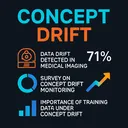
Five different sources are reviewed to understand Concept Drift in neural networks. 1) https://www.nature.com/articles/s41467-024-46142-w - Empirical data drift detection experiments on real-world medical imaging data 2) https://www.frontiersin.org/journals/artificial-intelligence/articles/10.3389/frai.2024.1330258/full - One or two things we know about concept drift—a survey on monitoring in evolving environments. Part B: locating and explaining concept drift 3) https://research.google/blog/learning-the-importance-of-training-data-under-concept-drift/ - Learning the importance of training data under concept drift Then two research papers: 4) https://arxiv.org/pdf/2004.05785 - Learning under Concept Drift: A Review 5) https://arxiv.org/pdf/2203.11070 - From Concept Drift to Model Degradation: An Overview on Performance-Aware Drift Detectors These sources collectively explore the critical issue of concept drift in machine learning, which refers to systematic changes in data distributions over time that can degrade model performance. The "Nature Communications" excerpt details empirical experiments on real-world medical imaging data (chest X-rays) to evaluate data-based drift detection methods, finding that monitoring performance alone is often insufficient to detect such shifts. Complementing this, "Frontiers" provides a broader survey on monitoring, localizing, and explaining concept drift, particularly in unsupervised settings, and discusses how drift intensity and data dimensionality impact detection. The final "arXiv" papers offer comprehensive reviews of concept drift research, outlining a framework of detection, understanding, and adaptation, and classifying performance-based detection methods while also categorizing various types of concept drift (e.g., sudden, gradual, incremental, recurring) and their probabilistic sources.
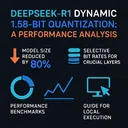
This reviews a document dated January 27, 2025, from Daniel and Michael at Unsloth, details their work on quantizing DeepSeek-R1's 671B parameter model, significantly reducing its size by 80% to 131GB while maintaining functionality. They achieved this dynamic quantization by selectively applying higher bitrates to crucial layers and lower bitrates to less sensitive MoE layers, contrasting with naive quantization methods that render the model unusable. The text explains how to run these quantized versions, discussing hardware requirements, performance benchmarks, and chat template considerations. It also offers a guide for local execution on various systems, including specific instructions for GPU and Apple devices, and outlines the use of Ollama/Open WebUI Source: https://unsloth.ai/blog/deepseekr1-dynamic

The provided text introduces DeepSeekMoE, an innovative Mixture-of-Experts (MoE) architecture designed to enhance expert specialization in large language models. The authors propose two key strategies: fine-grained expert segmentation, which divides experts into smaller, more numerous units for flexible combinations, and shared expert isolation, which designates specific experts for common knowledge to reduce redundancy. Through comprehensive experimentation, DeepSeekMoE demonstrates superior performance and computational efficiency compared to conventional MoE models like GShard and dense models, even when scaled up to 145B parameters. The research also highlights DeepSeekMoE's adaptability for fine-tuning into chat models and emphasizes its lower redundancy among routed experts, ultimately aiming for more accurate and efficient knowledge acquisition. Source: 2024 - https://arxiv.org/pdf/2401.06066
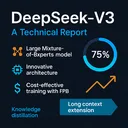
This paper introduces DeepSeek-V3, a large Mixture-of-Experts (MoE) model designed to advance open-source language model capabilities with improved training efficiency and performance. The document details its innovative architecture, including an auxiliary-loss-free load balancing strategy and a Multi-Token Prediction objective for enhanced data efficiency and future token prediction. It further explains the infrastructures and optimizations that enable its cost-effective training, such as efficient communication protocols and a low-precision training framework using FP8. Finally, the paper outlines DeepSeek-V3's pre-training and post-training processes, including its long context extension capabilities and knowledge distillation techniques from the DeepSeek-R1 series, along with comprehensive evaluations across various benchmarks demonstrating its strong performance, especially in coding and mathematics. Source: https://arxiv.org/pdf/2412.19437
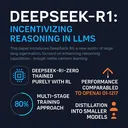
This paper introduces DeepSeek-R1, a new suite of large language models developed by DeepSeek-AI, focusing on enhancing reasoning capabilities through reinforcement learning (RL). It details the development of DeepSeek-R1-Zero, a model trained purely with RL that demonstrates strong reasoning but has readability issues, and DeepSeek-R1, which addresses these flaws by incorporating multi-stage training with initial "cold-start" data and achieves performance comparable to OpenAI-o1-1217. The document also covers the distillation of reasoning abilities from larger DeepSeek-R1 models into smaller, more efficient models, making them available to the research community. Performance benchmarks on various tasks, including mathematics, coding, and general knowledge, are presented, highlighting the models' advancements. The paper concludes by discussing the effectiveness of distillation versus direct RL on smaller models and outlines future research directions. Source: https://arxiv.org/pdf/2501.12948
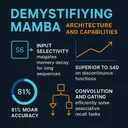
This document explores the Mamba architecture, a novel approach to sequence modeling that offers an efficient alternative to Transformers. It primarily investigates the role of "input selectivity" within Mamba's core component, the S6 layer, and its impact on the model's capabilities. The research proves Mamba's superiority over its predecessor, S4D, in approximating discontinuous functions and demonstrates how input selectivity helps counteract memory decay for long sequences. Furthermore, the paper analyzes how the complete Mamba architecture, including convolution and gating, efficiently solves complex associative recall tasks like Multiple-Query Associative Recall (MQAR) and Induction Heads, with theoretical bounds on model size confirmed by empirical results. The findings offer a mechanistic understanding of Mamba's performance and suggest pathways for future enhancements, such as optimizing input dependence within its state matrix. Source: https://arxiv.org/pdf/2506.11891
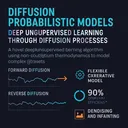
This paper introduces a novel deep unsupervised learning algorithm that leverages non-equilibrium thermodynamics to model complex datasets. The core idea involves a forward diffusion process that systematically degrades data structure, and then learning a reverse diffusion process to reconstruct it, creating a flexible generative model. This approach allows for efficient learning, sampling, and probability evaluation in deep generative models, even with numerous layers. The authors demonstrate the method's efficacy on various datasets, including images, highlighting its ability to handle tasks like denoising and inpainting by multiplying distributions.

This research paper focuses on a safety evaluation of DeepSeek-R1 and DeepSeek-V3 models within Chinese language contexts, an area previously underexplored. It highlights that while DeepSeek models possess strong reasoning capabilities, previous studies, primarily in English, have revealed significant safety flaws. To address the gap in Chinese safety assessments, the authors introduce CHiSafetyBench, a new benchmark designed to systematically test these models across various safety categories like discrimination and violation of values. The experimental results quantitatively demonstrate the deficiencies of DeepSeek models in Chinese safety performance, particularly in identifying and refusing harmful content, offering insights for future improvements. The authors acknowledge potential biases in their evaluation and plan to continually optimize the benchmark. Source: https://arxiv.org/pdf/2502.11137
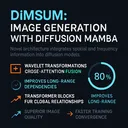
This academic paper introduces DiMSUM, a novel architecture for image generation that enhances diffusion models by integrating both spatial and frequency information. The authors address limitations of existing state-space models like Mamba in handling image data by incorporating wavelet transformations and a cross-attention fusion layer, which better captures both local details and long-range dependencies. Furthermore, the model includes globally shared transformer blocks to improve global relationship modeling, a known weakness of Mamba. Experiments show that DiMSUM achieves superior image quality and faster training convergence compared to current state-of-the-art models on various benchmarks. Source: 2025 - https://arxiv.org/pdf/2411.04168 - DiMSUM : Diffusion Mamba - A Scalable and Unified Spatial-Frequency Meth

The provided text introduces DroidSpeak, a novel distributed Large Language Model (LLM) inference system designed to enhance the efficiency of compound AI systems. It addresses the challenge of reusing Key-Value (KV) caches across different LLMs that share the same architectural foundation, a problem current systems struggle with. DroidSpeak achieves significant throughput improvements and faster prefill times by selectively recomputing only a small, "critical" subset of KV cache layers, while reusing the rest, with negligible impact on quality. This selective recomputation, determined through an offline profiling stage, is further optimized by pipelining re-computation with KV cache loading, making it practical for multi-LLM workflows in distributed settings. The paper demonstrates DroidSpeak's robustness and benefits across various tasks and model pairs. Source: Published July 2025 https://arxiv.org/pdf/2411.02820v4

The paper introduces Dynamic Tanh (DyT), a novel element-wise operation designed to replace normalization layers in Transformer models. Traditionally, normalization layers like Layer Normalization (LN) are considered essential for stable and effective training of deep neural networks. However, this paper challenges that belief by demonstrating that DyT, which mimics the S-shaped input-output mapping observed in LN, can achieve comparable or superior performance across various tasks, including vision, language, and speech processing, often without extensive hyperparameter tuning. This research suggests that the non-linear squashing of extreme values by normalization layers, rather than their statistical normalization, is a key mechanism, offering new insights into their role in deep learning architectures. While effective for Transformers, preliminary findings suggest DyT may not directly substitute Batch Normalization (BN) in classic ConvNets. Source: Published June 2025 https://arxiv.org/pdf/2503.10622
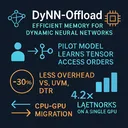
This document introduces DyNN-Offload, a novel memory management system designed to overcome the GPU memory limitations faced when training large dynamic neural networks (DyNNs). Unlike traditional methods that struggle with DyNNs' unpredictable memory access patterns, DyNN-Offload employs a learned approach using a lightweight "pilot model" to predict tensor access orders. By using an idiom-based representation of network operations, the pilot model efficiently guides the migration of tensors between CPU and GPU memory, enabling significantly larger DyNN training on a single GPU. The system demonstrates superior performance compared to existing solutions like unified virtual memory (UVM) and dynamic tensor rematerialization (DTR), while introducing minimal overhead. Its transparent integration with existing deep learning frameworks makes it a practical solution for advancing large-scale DyNN development. Source: 2024 - https://web.cs.ucla.edu/~harryxu/papers/ren-hpca24.pdf - Enabling Large Dynamic Neural Network Training with Learning-based Memory Management
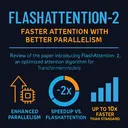
This reviews the paper that introduces FlashAttention-2, an optimized attention algorithm designed to significantly improve the speed and efficiency of Transformer models, particularly for longer sequence lengths. Building upon its predecessor, FlashAttention, which made attention calculations more memory-efficient by leveraging GPU memory hierarchies, FlashAttention-2 further refines performance. The key innovations involve tweaking the algorithm to reduce non-matrix multiplication operations, enhancing parallelism across different thread blocks for better GPU occupancy, and optimizing work partitioning within thread blocks to minimize shared memory communication. These advancements lead to approximately 2x speedup compared to FlashAttention and up to 10x faster performance than standard implementations, enabling more efficient training of large-scale language models and supporting new applications in areas like long document understanding and high-resolution media generation.
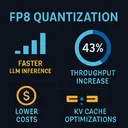
Three sources are reviewed to understand the value of FP8 quantization: https://www.baseten.co/blog/33-faster-llm-inference-with-fp8-quantization/ https://lmdeploy.readthedocs.io/en/latest/quantization/kv_quant.html?utm_source=chatgpt.com https://developer.nvidia.com/blog/introducing-new-kv-cache-reuse-optimizations-in-nvidia-tensorrt-llm/ The provided sources collectively discuss quantization techniques and Key-Value (KV) cache optimizations for improving the performance of Large Language Models (LLMs). Specifically, Baseten highlights FP8 quantization of LLMs like Mistral 7B, demonstrating significant speed, throughput, and cost improvements with minimal impact on output quality, suitable for production environments. LMDeploy focuses on INT4/INT8 KV cache quantization, showing how it increases the number of concurrent operations and boosts throughput for various LLMs, while also detailing its impact on model accuracy across different benchmarks. Lastly, NVIDIA's TensorRT-LLM introduces advanced KV cache reuse optimizations, including priority-based eviction and a KV cache event API, enabling more intelligent memory management and routing decisions to further enhance LLM inference efficiency.

We review a letter communicated by Yann Le Cun and published in Neural Computation in 2006, details a fast learning algorithm for deep belief networks. Authored by Geoffrey E. Hinton, Simon Osindero, and Yee-Whye Teh, the paper introduces "complementary priors" to simplify inference in complex belief nets. They propose a greedy, layer-by-layer learning approach that initializes a deep, directed belief network, followed by a fine-tuning procedure using a contrastive variant of the wake-sleep algorithm. The authors demonstrate the algorithm's effectiveness by achieving superior handwritten digit classification on the MNIST database, outperforming other leading discriminative methods. This work highlights the advantages of generative models for machine learning tasks.

These sources collectively introduce and explain MedGemma and MedSigLIP, two collections of open-source AI models developed by Google Health for healthcare applications. The MedGemma collection consists of generative models (4B multimodal and 27B text-only variants) designed for tasks requiring text generation, like report creation or visual question answering, and is based on the Gemma 3 architecture. MedSigLIP is a lightweight image and text encoder primarily for medical image interpretation without text generation, such as classification and retrieval. Both are part of the Health AI Developer Foundations (HAI-DEF) initiative, emphasizing flexibility, privacy, and customization through open access to model weights, allowing developers to fine-tune them for specific clinical use cases. The documents also highlight the evaluation and responsible deployment efforts for these models, aiming to advance AI in healthcare while mitigating potential risks.Sources:1) https://github.com/Google-Health/medgemma2) https://github.com/Google-Health/medsiglip3) https://research.google/blog/medgemma-our-most-capable-open-models-for-health-ai-development/4) 2024 - https://arxiv.org/pdf/2403.08295
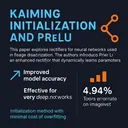
This academic paper explores rectified activation units (rectifiers) in neural networks, which are crucial for advanced image classification. The authors introduce a Parametric Rectified Linear Unit (PReLU), an enhanced rectifier that dynamically learns its parameters, leading to improved model accuracy with minimal added computational cost or overfitting risk. Furthermore, the paper presents a robust initialization method specifically designed for these rectifiers, enabling the effective training of extremely deep neural networks from the ground up. The research showcases that their PReLU networks (PReLU-nets) surpassed human-level performance on the challenging ImageNet 2012 classification dataset, achieving a 4.94% top-5 error rate, a significant improvement over previous state-of-the-art models. Ultimately, this work contributes to the development of more powerful and trainable deep learning models for visual recognition tasks. Source: https://arxiv.org/pdf/1502.01852

Three research papers are reviewed: 1) https://arxiv.org/pdf/2401.18079 - KVQuant: Towards 10 Million Context Length LLM Inference with KV Cache Quantization 2) https://arxiv.org/pdf/2402.02750 - KIVI: A Tuning-Free Asymmetric 2bit Quantization for KV Cache 3) https://arxiv.org/pdf/2502.04420 - KVTuner: Sensitivity-Aware Layer-Wise Mixed-Precision KV Cache Quantization for Efficient and Nearly Lossless LLM Inference These sources collectively discuss methods for quantizing Key-Value (KV) caches in large language models (LLMs) to reduce memory consumption and improve inference efficiency, especially for long context lengths. They explore various quantization strategies, highlighting the importance of per-channel quantization for Keys and per-token quantization for Values due to their distinct data distributions. Key advancements include pre-RoPE quantization, non-uniform quantization, and dense-and-sparse techniques to maintain accuracy at low bitrates, such as 2-bit and 3-bit. The papers also detail custom kernel implementations and offline calibration methods to minimize computational overhead, demonstrating significant throughput gains and increased batch sizes while preserving model performance across diverse benchmarks and LLM architectures.

The provided texts discuss LMCache, an open-source library designed to enhance the efficiency of large language models (LLMs) by optimizing Key-Value (KV) cache management. A significant innovation highlighted is CacheBlend, a technique integrated into LMCache that drastically improves KV cache hit rates in retrieval-augmented generation (RAG) applications by enabling the reuse of non-prefix texts. This leads to substantial reductions in time to first token (TTFT) and increased throughput, while maintaining high generation quality. The documentation further details LMCache's capabilities, including KV cache offloading to various storage types, sharing across LLMs, and its deployment in production environments like Kubernetes.Sources:1) March 1, 2025 - https://blog.lmcache.ai/2025-03-31-eurosys/ - CacheBlend (Best Paper @ ACM EuroSys'25): Enabling 100% KV Cache Hit Rate in RAG2) https://docs.lmcache.ai/
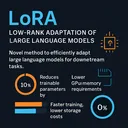
This reviews the paper which introduces Low-Rank Adaptation (LoRA), a novel method designed to efficiently adapt large language models for specific downstream tasks. Traditional fine-tuning, which retrains all model parameters, becomes prohibitively expensive for models like GPT-3 with billions of parameters. LoRA addresses this by freezing the pre-trained weights and injecting small, trainable rank decomposition matrices into the Transformer architecture, significantly reducing the number of trainable parameters and GPU memory requirements. This approach matches or exceeds the performance of full fine-tuning while offering faster training, lower storage costs, and no additional inference latency. The research also explores the optimal low rank for adaptation and the relationship between the original model weights and the learned low-rank updates. Source: https://arxiv.org/pdf/2106.09685

Nine different sources on Mamba are reviewed, including the paper that introduced it. The provided sources explore Mamba, a linear recurrent neural network (RNN) architecture, and its integration with Transformers to create hybrid models for large language models (LLMs). A key focus is on Mamba's efficiency and long-context handling compared to Transformers' memory and computational demands due to their KV cache. While Transformers excel at in-context learning, pure Mamba models initially struggled, leading to the development of hybrid architectures like Jamba and Zamba that combine both for improved performance and efficiency. Discussions also touch upon distillation techniques to transfer Transformer capabilities to Mamba, the benefits of character-level tokenization for Mamba, and ongoing research into optimizing state updates and selectivity mechanisms in these next-generation sequence models.Sources:1) https://venturebeat.com/ai/falcon-mamba-7bs-powerful-new-ai-architecture-offers-alternative-to-transformer-models2) https://www.ai21.com/research/jamba-a-hybrid-transformer-mamba-language-model/3) https://nathanpaull.substack.com/p/mamba-will-never-beat-the-transformer-24-03-084) https://n1o.github.io/posts/ssm-transformer-hybrids-guide5) https://youtu.be/yceNl9C6Ir0?si=LTVLnBtTwiU5j1SK6) https://www.together.ai/blog/the-mamba-in-the-llama-distilling-and-accelerating-hybrid-models7) https://arxiv.org/pdf/2312.007528) https://www.reddit.com/r/MachineLearning/comments/18d65bz/d_thoughts_on_mamba/9) https://arxiv.org/pdf/2403.19887

The research paper introduces MEGABYTE, a novel multi-scale transformer architecture designed to efficiently process exceptionally long sequences, exceeding one million bytes. Unlike traditional transformers that struggle with long sequences due to quadratic self-attention costs and large feedforward layers, MEGABYTE segments data into "patches" and employs a local submodel within each patch and a global model between patches. This innovative approach significantly reduces computational complexity, allowing for larger models at a lower cost and improving generation speed. The paper presents extensive experiments demonstrating MEGABYTE's superior performance across various modalities, including long-context language modeling, high-resolution image generation, and raw audio modeling, often outperforming existing methods and establishing the viability of tokenization-free autoregressive sequence modeling at scale. Source: 2023 - https://arxiv.org/pdf/2305.07185 - MEGABYTE: Predicting Million-byte Sequences with Multiscale Transformers
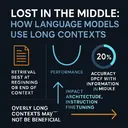
This academic paper explores how language models utilize long input contexts, focusing on their ability to identify and retrieve relevant information. The authors conducted experiments using multi-document question answering and key-value retrieval tasks, varying the position of crucial data within the input. Their findings reveal a "U-shaped" performance curve, indicating that models are most effective when relevant information is at the beginning or end of the context, with performance significantly declining when it's in the middle. The study further investigates the impact of model architecture, query contextualization, and instruction fine-tuning on this observed positional bias, ultimately suggesting that providing overly long contexts might not always be beneficial due to these limitations.

Double paper review for modern quantization techniques. These two academic papers address the crucial challenge of quantizing Large Language Models (LLMs) to reduce their computational and storage demands while preserving accuracy. The first source, "Post Training Quantization of Large Language Models with Microscaling Formats," investigates combining SmoothQuant, AWQ, and GPTQ post-training quantization techniques and extends their applicability to microscaling (MX) formats, demonstrating improved perplexity and accuracy, especially at lower bit-widths. The second source, "CROSSQUANT: A POST-TRAINING QUANTIZATION METHOD WITH SMALLER QUANTIZATION KERNEL FOR PRECISE LARGE LANGUAGE MODEL COMPRESSION," introduces the novel concept of the "quantization kernel"—elements quantized to zero—and proposes CrossQuant, a method that significantly reduces this kernel to maintain precision during activation quantization, outperforming other baselines across various LLMs and tasks. Both sources aim to enhance the efficiency and deployability of LLMs through advanced quantization strategies.
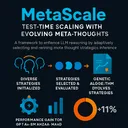
The source introduces MetaScale, a novel framework designed to enhance Large Language Models' (LLMs) complex reasoning capabilities during inference. Unlike traditional approaches that rely on fixed reasoning patterns, MetaScale enables LLMs to adaptively select and refine cognitive strategies, termed "meta-thoughts," for each task. It initializes a diverse pool of these strategies, then iteratively selects and evaluates them using a multi-armed bandit algorithm, guided by a reward model. To foster continuous improvement, a genetic algorithm evolves high-performing meta-thoughts, refining the strategy pool over time. Experiments demonstrate that MetaScale consistently outperforms existing methods in accuracy and generalization, notably showing an 11% performance gain for GPT-4o on Arena-Hard, by producing more structured and expert-level responses as sampling budgets increase. Source: https://arxiv.org/html/2503.13447v1
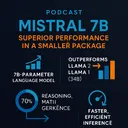
This paper introduces Mistral 7B, a new 7-billion-parameter language model designed for both superior performance and efficiency. The paper highlights how Mistral 7B outperforms larger existing models like Llama 2 (13B) and Llama 1 (34B) in various benchmarks, including reasoning, mathematics, and code generation, while maintaining efficient inference. This is achieved through architectural innovations such as grouped-query attention (GQA) for faster inference and sliding window attention (SWA) for handling longer sequences with reduced computational cost. Furthermore, a fine-tuned version, Mistral 7B – Instruct, demonstrates strong performance in instruction following and human evaluations, showcasing its adaptability and potential for real-world applications, including content moderation.
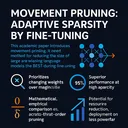
This academic paper introduces movement pruning, a novel method for reducing the size of large pre-trained language models like BERT during fine-tuning. Unlike traditional magnitude pruning which removes weights based on their absolute values, movement pruning prioritizes weights that change significantly during the fine-tuning process, demonstrating superior performance in high-sparsity scenarios. The authors provide mathematical foundations for their approach and empirically compare it against existing zeroth- and first-order pruning techniques, highlighting its effectiveness, especially when combined with distillation. The research emphasizes the potential for resource reduction, enabling the deployment of complex models on less powerful hardware and fostering broader accessibility in the field of natural language processing. Source: Published 2020 https://papers.neurips.cc/paper_files/paper/2020/file/eae15aabaa768ae4a5993a8a4f4fa6e4-Paper.pdf

We review data from the Windows Experience Blog which introduces a new era of Windows experiences, heavily integrated with Artificial Intelligence. The blog focuses on Mu, a compact, efficient language model designed for on-device performance on Copilot+ PCs, specifically highlighting its role in powering an AI agent within Windows Settings to enable natural language interaction for system adjustments. The blog details a range of new AI-powered features for Windows 11 and Copilot+ PCs, including enhancements to Windows Search, Click to Do, Photos, Paint, Snipping Tool, and Notepad, all aimed at making user interactions more intuitive, efficient, and creative. Both sources emphasize optimizing AI capabilities directly on hardware for speed and privacy, showcasing Microsoft's commitment to transforming the user experience through integrated AI.

We review MUVERA, a novel algorithm designed to significantly improve the efficiency of multi-vector information retrieval. Traditional information retrieval often uses single-vector embeddings, which are computationally fast but less accurate than multi-vector models like ColBERT. While multi-vector models offer enhanced accuracy by representing data points with sets of embeddings, their complex similarity scoring leads to substantial computational costs. MUVERA addresses this challenge by transforming multi-vector retrieval into a simpler single-vector search problem using Fixed Dimensional Encodings (FDEs), which are single vectors approximating multi-vector similarity. This approach allows MUVERA to leverage highly optimized maximum inner product search (MIPS) algorithms, resulting in faster retrieval times with minimal accuracy loss, even outperforming prior state-of-the-art methods like PLAID. The research provides theoretical guarantees for FDEs and demonstrates their effectiveness across various information retrieval datasets.

67 authors were involved in this research! This source is an academic paper titled "PaLM: Scaling Language Modeling with Pathways," authored by Aakanksha Chowdhery and numerous collaborators. It details the development and capabilities of PaLM (Pathways Language Model), a 540-billion parameter Transformer language model trained on 6144 TPU v4 chips using a new ML system called Pathways. The paper highlights PaLM's state-of-the-art performance in few-shot learning across various natural language tasks, including multilingual tasks and source code generation. Additionally, the authors provide analysis on bias, toxicity, and training data memorization, alongside a discussion of ethical considerations related to large language models. The document is hosted on arXiv, an open-access repository for scholarly articles, and includes submission history, full-text links, and citation tools. https://arxiv.org/abs/2204.02311
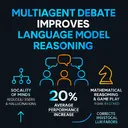
This paper introduces a multi-agent debate framework designed to enhance the factuality and reasoning capabilities of large language models (LLMs). The core idea involves multiple instances of an LLM proposing and critiquing solutions in iterative rounds until a consensus is reached. The authors demonstrate that this "society of minds" approach significantly improves performance across various tasks, including mathematical reasoning, strategic game play, and generating factually accurate biographies, by reducing errors and hallucinations often seen in single-model outputs. This method is directly applicable to existing black-box LLMs and can even lead to correct answers when individual models initially err, suggesting a powerful avenue for LLM self-improvement. Source: https://arxiv.org/pdf/2305.14325

Thus paper introduces PartitionedVC, an innovative external memory graph analytics framework designed to enhance the processing of large graphs that exceed main memory capacity, especially when utilizing SSDs. The core of PartitionedVC's improvement over existing systems like GraphChi lies in its use of a compressed sparse row (CSR) based graph storage for efficiently loading only active vertices, unlike shard-based frameworks that load entire graph segments regardless of activity. To overcome CSR's limitation with random updates, PartitionedVC employs a multi-log update mechanism, dedicating a separate log for each vertex interval to streamline update processing and eliminate costly external sorting. Furthermore, it incorporates an edge-log optimizer that proactively logs outgoing edges of likely active vertices, significantly reducing read amplification and overall performance bottlenecks associated with SSD page granular access.
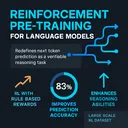
The source introduces Reinforcement Pre-Training (RPT), a novel approach that redefines next-token prediction in large language models (LLMs) as a verifiable reasoning task. Unlike traditional methods relying on costly human feedback or limited annotated data, RPT uses reinforcement learning (RL) with intrinsic, rule-based rewards derived directly from the pre-training corpus. This method incentivizes LLMs to engage in a deeper "chain-of-thought" reasoning process before predicting the next token, transforming vast unannotated text into a large-scale RL dataset. The paper demonstrates that RPT improves next-token prediction accuracy, enhances reasoning abilities on various benchmarks, and provides a stronger foundation for subsequent RL fine-tuning, suggesting a promising new direction for developing more capable LLMs. https://arxiv.org/pdf/2506.08007
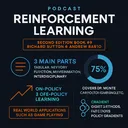
This reviews the public second edition book by Richard Sutton and Andrew Barton on "Reinforcement learning". This document serves as an expanded second edition of a book on reinforcement learning (RL), significantly updating the prior version from 1979. It organizes RL concepts into three main parts: tabular solution methods, function approximation for larger problems, and the interdisciplinary connections of RL with psychology and neuroscience. Key areas covered include dynamic programming (DP), Monte Carlo methods, temporal-difference (TD) learning, on-policy and off-policy learning, and gradient-based methods like policy gradients. The text provides a comprehensive overview of algorithms, theoretical underpinnings, and real-world applications such as game playing (e.g., AlphaGo) and system control, emphasizing the evolution of the field and areas for future research like safe RL and automated task selection. http://incompleteideas.net/book/RLbook2020.pdf
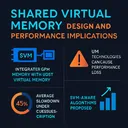
The provided academic paper investigates Shared Virtual Memory (SVM), a technology that integrates GPU memory into host virtual memory systems to improve programming portability and productivity for GPU accelerators. While Unified Memory (UM) aims for transparent data migration, the authors identify that current UM technologies often cause significant performance loss. This research examines the SVM design, analyzes its interactions with applications' data accesses, and quantifies its performance implications across diverse applications, particularly highlighting bottlenecks under memory oversubscription. The study also proposes SVM-aware algorithms and discusses potential design changes to mitigate these performance issues, making it the first comprehensive study of AMD's SVM technology.

The sources discuss Mixture-of-Experts (MoE) models, a type of neural network that selectively activates different parameters for incoming data, offering a high parameter count at a constant computational cost. One paper introduces "MoE-Infinity," an offloading-efficient system designed to serve these memory-intensive models, particularly for users with limited GPU resources. It addresses latency issues in existing offloading approaches by introducing "Expert Activation Matrix" (EAM) for request-level tracing of expert usage, enabling more effective prefetching and caching strategies. The second source, "Switch Transformers," details a simplified MoE architecture that improves routing efficiency, reduces communication costs, and enhances training stability, even allowing lower-precision training. This innovation significantly accelerates pre-training speeds for large language models, demonstrating the benefits of scaling models by increasing sparse parameters while keeping computational costs stable.Sources:1) 2018 - https://arxiv.org/html/2401.14361v2 - MoE-Infinity: Offloading-Efficient MoE Model Serving2) 2022 - https://arxiv.org/pdf/2101.03961 - Switch Transformers: Scaling to Trillion Parameter Modelswith Simple and Efficient Sparsity
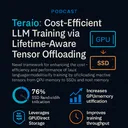
The research introduces Teraio, a novel framework designed to enhance the cost-efficiency and performance of large language model (LLM) training. This framework addresses the significant memory demands of LLMs by intelligently offloading inactive tensors from expensive GPU memory to more affordable PCIe-based solid-state drives (SSDs) and host memory. Teraio employs a lifetime-aware tensor offloading mechanism that profiles tensor activity patterns to generate optimized offloading and prefetching plans, thereby maximizing the utilization of both SSD bandwidth and GPU memory. By leveraging GPUDirect Storage, Teraio enables direct data transfer between GPUs and SSDs, bypassing CPU bottlenecks and improving overall training throughput. Experimental results demonstrate that Teraio significantly outperforms existing offloading solutions like ZeRO-Offload and ZeRO-Infinity, achieving faster training speeds and superior cost efficiency for various LLMs.
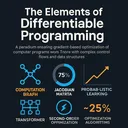
This document provides a comprehensive overview of differentiable programming, a paradigm enabling gradient-based optimization of computer programs, even those with complex control flows and data structures. It explores the fundamental concepts from automatic differentiation, including Jacobian and Hessian matrices, to the mathematical representation of programs as computation graphs and chains, encompassing neural network architectures like Transformers. The text further examines probabilistic learning methods, techniques for smoothing non-differentiable operations via optimization and integration, and various first and second-order optimization algorithms, highlighting the interplay between optimization, probability, and differentiation within this field. Source: June 2025 - https://arxiv.org/pdf/2403.14606v3 - The Elements of Differentiable Programming
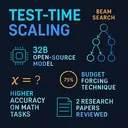
The provided sources discuss advancements in large language models (LLMs), specifically focusing on test-time compute scaling to enhance reasoning performance. One paper introduces s1-32B, an open-source model trained on a small, curated dataset of 1,000 reasoning problems, and its novel technique called budget forcing. This method controls the model's "thinking time" to improve accuracy on complex tasks, such as mathematical problem-solving. The other source is a figure illustrating a beam search example, a common technique used in LLM inference. Two research papers are reviewed: 1) https://arxiv.org/pdf/2408.03314 - 2024 - Scaling LLM Test-Time Compute Optimally can be More Effective than Scaling Model Parameters 2) https://arxiv.org/pdf/2501.19393 - 2025 - s1: Simple test-time scaling
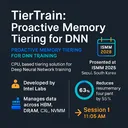
The provided text describes TierTrain: Proactive Memory Tiering for CPU-Based DNN Training, a paper presented at the International Symposium on Memory Management (ISMM 2025), co-located with PLDI 2025 in Seoul, South Korea. Authored by researchers from Intel Labs, the paper introduces TierTrain, a novel memory tiering solution designed to optimize Deep Neural Network (DNN) training on CPUs. This system proactively manages data placement across different memory tiers, like HBM, DRAM, CXL-attached memory, and NVMM, to reduce the fast memory footprint and improve performance in memory-constrained environments. The content also details the conference program, highlighting the specific session and time slot for the TierTrain presentation. Source: 2025 - https://conf.researchr.org/details/ismm-2025/ismm-2025-papers/10/TierTrain-Proactive-Memory-Tiering-for-CPU-Based-DNN-Training - TierTrain: Proactive Memory Tiering for CPU-Based DNN Training

This document introduces PagedAttention, an innovative attention algorithm, and vLLM, a high-throughput serving system for large language models (LLMs). The core problem addressed is the inefficient memory management of Key-Value (KV) cache in existing LLM serving systems, leading to significant memory waste and limited batch sizes. Inspired by operating system virtual memory and paging techniques, PagedAttention enables the KV cache to be stored in non-contiguous memory blocks, significantly reducing fragmentation and allowing flexible memory sharing. The paper highlights how vLLM, built upon PagedAttention, achieves 2-4 times higher throughput compared to state-of-the-art systems by optimizing KV cache utilization and supporting various complex decoding scenarios, such as parallel sampling and beam search.

This reviews the paper which introduced ZeRO-Offload, a novel technology designed to democratize large-scale deep learning model training by making it accessible even with limited GPU resources. It achieves this by strategically offloading data and computations to the CPU, thereby significantly increasing the size of models that can be trained on a single GPU—up to 13 billion parameters. The paper highlights ZeRO-Offload's efficiency, scalability, and usability, demonstrating superior throughput compared to existing methods like PyTorch and L2L, and near-linear scaling across multiple GPUs. Furthermore, it details optimizations such as a highly efficient CPU Adam optimizer and a one-step delayed parameter update to maximize performance without sacrificing model accuracy. This innovation aims to enable more data scientists to leverage truly massive deep learning models.
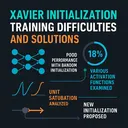
This document explores the challenges associated with training deep feedforward neural networks, specifically investigating why standard gradient descent with random initialization performs poorly. The authors examine the impact of various non-linear activation functions, like sigmoid, hyperbolic tangent, and a new softsign function, on network performance and the issue of unit saturation. They further analyze how activations and gradients change across layers and during training, leading to the proposal of a novel initialization scheme designed to accelerate convergence. The findings suggest that appropriate activation functions and initialization techniques are crucial for improving the learning dynamics and overall effectiveness of deep neural networks. Source: https://proceedings.mlr.press/v9/glorot10a/glorot10a.pdf

This August 2025 paper from Arizona State University's Data Mining and Machine Learning Lab investigates whether Chain-of-Thought (CoT) reasoning in Large Language Models (LLMs) represents genuine inference or merely superficial pattern matching. The authors hypothesize that CoT effectiveness is bounded by the training data's distribution, proposing that LLMs generate reasoning paths by approximating patterns seen during training. To test this, they developed DataAlchemy, a controlled environment for training LLMs from scratch, allowing for systematic probing across task, length, and format generalization. Their findings suggest that CoT reasoning is "a brittle mirage", performing well only within or near training data distributions and failing significantly when pushed beyond them. This implies CoT is a sophisticated form of structured pattern matching rather than a true understanding of logical inference. Source: https://arxiv.org/pdf/2508.01191

The provided source introduces Mem0 and Mem0g, two novel memory architectures designed to enhance Large Language Models (LLMs) by overcoming their inherent context window limitations and improving long-term conversational coherence. Mem0 focuses on dynamically extracting, consolidating, and retrieving salient information from conversations in natural language text, while Mem0g augments this with graph-based memory representations to capture complex relational structures. The research evaluates these systems against various baselines, including established memory-augmented systems, Retrieval-Augmented Generation (RAG) approaches, and proprietary models, demonstrating superior performance in accuracy across different question types (single-hop, multi-hop, temporal, and open-domain). Furthermore, Mem0 and Mem0g significantly reduce computational overhead and latency compared to full-context processing, highlighting their practical viability for production-ready AI agents requiring persistent and efficient memory. The findings underscore the critical role of structured and dynamic memory mechanisms for enabling more reliable and effective LLM-driven interactions over extended periods. Source: https://arxiv.org/pdf/2504.19413
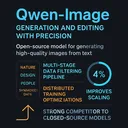
This academic paper introduces Qwen-Image, an open-source model designed for generating high-quality images from text. It details the multi-stage data filtering pipeline used to curate a diverse and high-quality training dataset, categorized into Nature, Design, People, and Synthetic Data. The paper also explains the Multimodal Scalable RoPE (MSRoPE) encoding strategy, which improves image resolution scaling and text-image alignment within the model's architecture. Furthermore, the text describes the distributed training optimizations and reinforcement learning strategies, like DPO and GRPO, employed to enhance model performance. Finally, Qwen-Image is showcased as a strong competitor to leading closed-source models in image generation, particularly excelling in Chinese text rendering and complex instruction following. Source: https://arxiv.org/pdf/2508.02324

This paper February 2025 paper introduces AiSAQ (All-in-Storage ANNS with Product Quantization), a novel method designed for Approximate Nearest Neighbor Search (ANNS) that significantly reduces DRAM (Dynamic Random-Access Memory) usage. Unlike traditional methods like DiskANN, which store compressed vectors in DRAM, AiSAQ offloads these to SSD (Solid-State Drive) storage, allowing for near-zero memory footprint even with billion-scale datasets. The paper details how this approach maintains high search performance while drastically lowering index load times and enabling rapid switching between large datasets, making it particularly beneficial for applications like Retrieval-Augmented Generation (RAG) in Large Language Models (LLMs) and multi-server environments. Experiments demonstrate AiSAQ's efficiency in terms of memory, latency, and cost-effectiveness for large-scale information retrieval. Source: February 2025 https://arxiv.org/pdf/2404.06004

This February 2025 paper introduces ELMo-Tune-V2, a novel framework that leverages Large Language Models (LLMs) to fully automate the optimization of Log-Structured Merge-tree-based Key-Value Stores (LSM-KVS). Unlike previous methods that rely on human experts or limited automated tuning, ELMo-Tune-V2 integrates LLMs for self-navigated workload characterization, automatic tuning across a broad parameter space, and real-time dynamic configuration adjustments. The framework demonstrates significant performance improvements for popular LSM-KVS systems like RocksDB, addressing the complex interplay of hardware, resource limits, and evolving workloads. ELMo-Tune-V2 achieves this through innovations in LLM-based workload synthesis, feedback-driven iterative fine-tuning, and real-time adaptive tuning, showcasing the potential of LLMs in solving complex data system optimization challenges. Source: https://arxiv.org/pdf/2502.17606

This February 2025 paper introduces fMoE, a novel fine-grained expert offloading system designed to optimize the serving efficiency of Mixture-of-Experts (MoE) Large Language Models (LLMs). The paper highlights the memory inefficiency of current MoE-based LLMs during inference due to inactive experts residing in GPU memory and the limitations of existing coarse-grained offloading solutions that struggle with latency-memory trade-offs. fMoE addresses these challenges by tracking iteration-level expert probability distributions through "expert maps" and leveraging input semantic embeddings to intelligently guide expert prefetching, caching, and offloading decisions. Experiments show that fMoE significantly reduces inference latency and improves expert hit rates compared to state-of-the-art methods. Source: https://arxiv.org/html/2502.05370v1
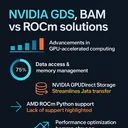
This is a huge review of 13 different sources on advancements in GPU-accelerated computing, focusing on data access, memory management, and performance optimization for large datasets. Several sources highlight NVIDIA's initiatives like GPUDirect Storage and the AI Data Platform, which streamline data transfer directly between storage and GPUs, reducing CPU bottlenecks. Conversely, other documents analyze AMD's efforts with ROCm, acknowledging its rapid software stack improvements but also pointing out challenges like lack of comprehensive Python support and the need for increased R&D investment to compete with NVIDIA's established CUDA ecosystem. Concepts such as GPU-orchestrated memory tiering and novel I/O primitives are presented as solutions to overcome limitations in GPU memory capacity and PCIe bandwidth, enabling more efficient processing of extensive data analytics and AI workloads. Source 1: GPU-Initiated On-Demand High-Throughput Storage Access in the BaM System Architecture https://arxiv.org/pdf/2203.04910 Source 2: Vortex: Overcoming Memory Capacity Limitations in GPU-Accelerated Large-Scale Data Analytics https://arxiv.org/pdf/2502.09541 Source 3: GPU as Data Access Engines https://files.futurememorystorage.com/proceedings/2024/20240808_NETC-301-1_Newburn.pdf Source 4: Performance Analysis of Different IO Methods between GPU Memory and Storage https://www.tkl.iis.u-tokyo.ac.jp/new/uploads/publication_file/file/1051/6C-03.pdf Source 5: GDS cuFile API Reference - https://docs.nvidia.com/gpudirect-storage/api-reference-guide/index.html Source 6: AMD 2.0 – New Sense of Urgency | MI450X Chance to Beat Nvidia | Nvidia’s New Moat Rapid Improvements, Developers First Approach, Low AMD AI Software Engineer Pay, Python DSL, UALink Disaster, MI325x, MI355x, MI430X UL4, MI450X Architecture, IF64/IF128, Flexible IO, UALink, IFoE https://semianalysis.com/2025/04/23/amd-2-0-new-sense-of-urgency-mi450x-chance-to-beat-nvidia-nvidias-new-moat/ Source 7: Accelerating and Securing GPU Accesses to Large Datasets https://www.nvidia.com/en-us/on-demand/session/gtc24-s62559/ Source 8: GMT: GPU Orchestrated Memory Tiering for the Big Data Era https://dl.acm.org/doi/10.1145/3620666.3651353 Source 9: GPUDirect Storage https://docs.nvidia.com/gpudirect-storage/ Source 10: GPUDirect Storage: A Direct Path Between Storage and GPU Memory https://developer.nvidia.com/blog/gpudirect-storage/ Source 11: Introducing ROCm-DS: GPU-Accelerated Data Science for AMD Instinct™ GPUs https://rocm.blogs.amd.com/software-tools-optimization/introducing-rocm-ds-revolutionizing-data-processing-with-amd-instinct-gpus/README.html Source 12: NVIDIA and Storage Industry Leaders Unveil New Class of Enterprise Infrastructure for the Age of AI https://nvidianews.nvidia.com/news/nvidia-and-storage-industry-leaders-unveil-new-class-of-enterprise-infrastructure-for-the-age-of-ai Source 13: Why is CUDA so much faster than ROCm? https://www.reddit.com/r/MachineLearning/comments/1fa8vq5/d_why_is_cuda_so_much_faster_than_rocm/
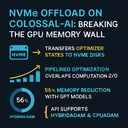
We review Colossal-AI's NVMe offload functionality, designed to overcome GPU memory limitations when training large-scale models by transferring optimizer states to NVMe disks. It highlights the TensorNVMe library, which facilitates this process and is compatible with various disk types, though NVMe SSDs are recommended for optimal performance. The text further explains the pipelined optimization process that overlaps computation and I/O, demonstrating its usage with CPUAdam and HybridAdam optimizers. Practical examples using GPT models illustrate the memory savings achieved through NVMe offloading for both CPU and Gemini-backed training. Finally, an API reference provides detailed information on the HybridAdam and CPUAdam classes and their parameters. Source: https://colossalai.org/docs/features/nvme_offload/
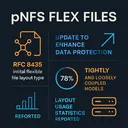
This reviews the IETF Parallel Network File System (pNFS), an extension to NFS that separates file metadata from data storage. Specifically, "RFC 8435" introduces the initial flexible file layout type, enabling pNFS to utilize existing protocols and storage devices with limited metadata server interaction, incorporating client-side mirroring for data replication. Then we review, "Parallel NFS (pNFS) Flexible File Layout Version 2," details an update to this layout, enhancing data protection with additional methods like the Mojette algorithm, and refining the management of tightly and loosely coupled storage device models, including how client I/O errors and layout usage statistics are reported and managed. Both sources discuss the mechanisms for recalling layouts, client fencing, and the security considerations inherent in these distributed file system architectures.Sources: https://www.ietf.org/archive/id/draft-ietf-nfsv4-layoutwcc-02.html - Add LAYOUT_WCC to NFSv4.2's Flex File Layout Typehttps://www.ietf.org/archive/id/draft-haynes-nfsv4-flexfiles-v2-00.html - Parallel NFS (pNFS) Flexible File Layout Version 2https://datatracker.ietf.org/doc/rfc8435/ - Parallel NFS (pNFS) Flexible File LayoutRFC 8435
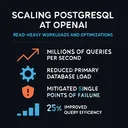
A video transcript is used to review the PostgreSQL Development Conference (PGConf.dev 2025) presentation titled "Scaling Postgres to the Next Level at OpenAI." The speaker, Bhan from OpenAI, outlines their extensive experience scaling PostgreSQL to support critical, read-heavy workloads without traditional sharding, achieving millions of queries per second. He discusses optimizations implemented, such as reducing primary database load, improving query efficiency, and mitigating single points of failure. The talk also addresses past outages at OpenAI related to PostgreSQL, lessons learned, and areas where PostgreSQL could improve, like observability and schema change management. Source: https://youtu.be/Ni1SGhNu-Q4?si=CoHnwn7ccArykBAY

This 2022 paper is a reminder of issues with mmap() for databases. Yet many Vector Databases today rely on mmap(). This academic paper critically evaluates the use of memory-mapped file I/O (mmap) in Database Management Systems (DBMSs), arguing against its perceived benefits over traditional buffer pool implementations. The authors explain that while mmap appears to simplify file I/O by letting the Operating System (OS) handle data movement between storage and memory, it introduces significant correctness and performance issues. They detail problems concerning transactional safety, I/O stalls, error handling, and performance bottlenecks like TLB shootdowns, illustrating these points with experimental analysis. The paper concludes by advising against mmap for most DBMS applications, especially those requiring high throughput or transactional safety. Source: https://db.cs.cmu.edu/papers/2022/cidr2022-p13-crotty.pdf
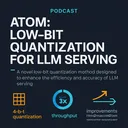
This April 2024 paper introduces Atom, a novel low-bit quantization method designed to enhance the efficiency and accuracy of Large Language Model (LLM) serving. The core challenge addressed is the high computational and memory costs associated with LLMs, especially when accommodating numerous user requests. Atom tackles this by quantizing both weights and activations to low-bit representations, like 4-bit, which significantly reduces memory consumption and boosts throughput by leveraging modern GPU capabilities. It maintains accuracy through mixed-precision quantization, fine-grained group quantization, and dynamic quantization, demonstrating substantial improvements in tokens per second with negligible accuracy loss compared to existing methods. The paper provides a detailed analysis of Atom's design, implementation, and comprehensive evaluation across various LLM models and tasks. Source: https://arxiv.org/pdf/2310.19102
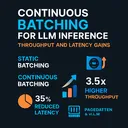
The source analyzes Large Language Model (LLM) inference, specifically focusing on how continuous batching significantly improves efficiency compared to traditional static batching. It explains the inefficiencies of static batching where GPUs are underutilized due to varying output lengths in a batch, and introduces continuous batching (also known as dynamic batching or iteration-level scheduling) as a solution that dynamically adds new requests as others complete. The document further highlights PagedAttention and vLLM as advanced memory optimization techniques built upon continuous batching, leading to even greater throughput and reduced latency. Benchmarking results demonstrate how these innovations drastically enhance throughput and lower latency across different workloads, ultimately reducing the cost of serving LLMs. Source: https://www.anyscale.com/blog/continuous-batching-llm-inference
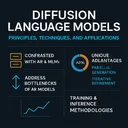
This August 2025 paper offers a comprehensive overview of diffusion language models (DLMs), contrasting them with traditional autoregressive (AR) and masked language models (MLMs). It highlights DLMs' unique advantages like parallel generation and iterative refinement, which address common AR model bottlenecks. The text also covers training methodologies for DLMs, including pre-training and fine-tuning techniques, as well as various inference strategies designed to enhance quality and efficiency. Furthermore, it explores the expansion of DLMs into multimodal applications and discusses current challenges and promising future research directions within the field. Source: https://arxiv.org/pdf/2508.10875

This August 2025 paper introduces Self-Search Reinforcement Learning (SSRL), a novel method that enables Large Language Models (LLMs) to access and utilize their internal knowledge for search-driven tasks, bypassing the need for external search engines like Google or Bing. The research explores how repeated sampling can enhance an LLM's intrinsic search capabilities and investigates the impact of various prompting strategies and training methodologies, including the benefits of information masking and format-based rewards. The paper demonstrates that SSRL-trained models can effectively generalize to real-world search scenarios while often outperforming methods that rely on external search APIs, suggesting LLMs can function as powerful internal knowledge bases for complex queries. Source: https://arxiv.org/pdf/2508.10874
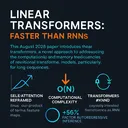
This August 2020 paper introduces linear transformers, a novel approach to addressing the computational and memory inefficiencies of traditional transformer models, particularly for long sequences. By reframing the self-attention mechanism using a linear dot-product of kernel feature maps, the authors reduce the computational complexity from quadratic to linear, enabling significantly faster autoregressive inference. The research highlights the relationship between transformers and recurrent neural networks (RNNs), demonstrating that a causally masked transformer can be expressed as an RNN, thus allowing for constant time and memory per prediction during inference. Experimental results across image generation and speech recognition tasks show that linear transformers achieve comparable performance to standard transformers while being orders of magnitude faster and requiring less memory. Source: https://arxiv.org/pdf/2006.16236

This August 2025 survey paper explores efficient architectures for large language models (LLMs), addressing the computational challenges of models like Transformers. It categorizes advancements into linear sequence modeling, including linear attention and state-space models, which offer linear computational complexity. The document also examines sparse sequence modeling, such as static and dynamic sparse attention, designed to reduce computational demands by limiting interactions between elements. Furthermore, it discusses methods for efficient full attention, including IO-aware and grouped attention, and introduces sparse Mixture-of-Experts (MoE) models, which enhance efficiency through conditional computation. Finally, the survey highlights hybrid architectures that combine different efficient approaches and explores Diffusion LLMs and their applications across various modalities like vision and audio, underscoring the shift toward more sustainable and practical AI systems. Source: https://arxiv.org/pdf/2508.09834
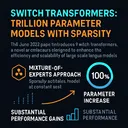
This June 2022 paper introduces Switch Transformers, a novel architecture designed to enhance the efficiency and scalability of large-scale language models. Unlike traditional models that reuse the same parameters, Switch Transformers employ a Mixture-of-Experts (MoE) approach, activating different parameters for each input to achieve a sparsely-activated model with significantly more parameters at a constant computational cost. The authors simplify the MoE routing algorithm and implement improved training techniques to overcome prior limitations such as complexity, communication overhead, and instability. The paper demonstrates that Switch Transformers achieve substantial pre-training speedups and performance gains across various natural language tasks, including multilingual settings, allowing for the creation of trillion-parameter models. It also discusses the combination of data, model, and expert-parallelism for optimal scaling and the feasibility of distilling these large sparse models into smaller, more deployable dense versions. Source: https://arxiv.org/pdf/2101.03961

We review Los Alamos National Laboratory advancements in managing indirect memory accesses in high-performance computing and it's relationship to overcoming the memory wall. The first goal of DoE’s next-generation supercomputer, ATS-5, is “Overcoming the memory wall: continued memory bandwidth performance improvements for tri-lab applications. ”"DX100" introduces a programmable data access accelerator designed to improve memory bandwidth utilization for irregular applications by reordering, coalescing, and interleaving memory requests. This accelerator aims to offload bulk indirect memory operations from CPU cores, thus reducing instruction count and cache misses. Complementing this, "A Workflow for the Synthesis of Irregular Memory Access Microbenchmarks" presents GS Patterns, a novel tool workflow that analyzes and synthesizes memory access patterns from complex applications. This workflow generates compact representations of sparse memory access patterns, enabling their use in benchmarking and hardware design to evaluate performance on various CPU and GPU architectures, particularly for gather and scatter operations that often bottleneck application performance.Sources:1) https://www.osti.gov/servlets/purl/2332770 - Codesign for memory intensive applications2) https://dl.acm.org/doi/pdf/10.1145/3695053.3731015 -DX100: Programmable Data Access Accelerator for Indirection3) https://dl.acm.org/doi/pdf/10.1145/3695794.3695816 - A Workflow for the Synthesis of Irregular Memory Access Microbenchmarks

The source provides an overview of Google DeepMind's AI research and models, highlighting various applications across different scientific disciplines and creative fields. It introduces Genie 3, a general-purpose world model capable of generating diverse, interactive, real-time environments from text prompts. The document details Genie 3's capabilities, such as simulating physical properties, natural worlds, and fictional scenarios, while also addressing its limitations and the company's commitment to responsible AI development. Ultimately, the text positions Genie 3 as a significant advancement for AI research and generative media, with potential for education, training, and embodied agent development. Source: https://deepmind.google/discover/blog/genie-3-a-new-frontier-for-world-models/

This March 2025 paper introduces compressed experts, an innovative method to enhance the efficiency of Mixture-of-Experts (MoE) models by reducing computational overhead while preserving performance. The core idea involves replacing less critical "auxiliary experts" with lightweight, compact representations, called compressed experts, during fine-tuning. This strategy allows for a significant reduction in activated parameters and inference costs—over 30% and 20% respectively, as demonstrated on models like Phi-MoE and OLMoE—while retaining more than 90% of the full model's performance. The paper details the method of identifying and aggregating these compressed experts and highlights their particular effectiveness in specialized reasoning tasks. Source: https://arxiv.org/pdf/2503.00634
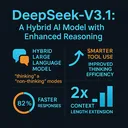
This is a review of DeepSeek's latest release announced on Hugging Face on August 21, 2025. The source introduces DeepSeek-V3.1, a hybrid large language model that supports both "thinking" and "non-thinking" operational modes, distinguishable through different chat templates. This updated model offers smarter tool calling capabilities and improved thinking efficiency, providing faster responses with comparable answer quality to previous versions. Built upon a two-phase long context extension, DeepSeek-V3.1 has expanded its training dataset significantly to enhance its understanding and generation of longer documents. The document also provides detailed chat templates for various interaction types, including multi-turn conversations and tool-calling scenarios for agents, alongside evaluation metrics demonstrating its superior performance in categories like general knowledge, code, and mathematics. Finally, it outlines usage examples, local deployment instructions, and licensing information for the model. Source: https://huggingface.co/deepseek-ai/DeepSeek-V3.1
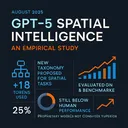
This August 2025 academic paper, titled "Has GPT-5 Achieved Spatial Intelligence? An Empirical Study," examines the spatial understanding and reasoning capabilities of advanced multi-modal AI models, including the recently released GPT-5. The authors propose a new taxonomy for spatial tasks and evaluate both proprietary and open-source models against eight key benchmarks, utilizing over a billion tokens for their study. Their findings indicate that while GPT-5 shows unprecedented strength in spatial intelligence, it still falls short of human performance across a broad range of tasks. The research also identifies specific challenging problems for multi-modal models and notes that proprietary models don't consistently outperform open-source options on the most difficult problems. The study further includes a qualitative evaluation of scenarios that are intuitive for humans but prove difficult for even the most advanced AI models. Source: https://arxiv.org/abs/2508.13142
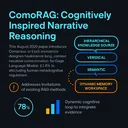
This August 2025 paper introduces ComoRAG, a novel framework designed to enhance long-context narrative comprehension in Large Language Models (LLMs) by simulating human metacognitive regulation. It addresses the limitations of existing Retrieval-Augmented Generation (RAG) methods, which struggle with stateful reasoning and integrating contradictory evidence over extended narratives. ComoRAG employs a dynamic cognitive loop that includes a hierarchical knowledge source (veridical, semantic, and episodic layers) and a dynamic memory workspace to continuously acquire new evidence and consolidate knowledge. Experimental results demonstrate ComoRAG's superior performance, particularly in solving complex narrative and inferential queries across various datasets, showcasing its robustness and flexibility as a model-agnostic, plug-and-play solution. Source: https://arxiv.org/pdf/2508.10419
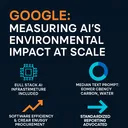
This August 2025 paper presents Google's comprehensive methodology for measuring the environmental impact of AI inference workloads in a large-scale production environment. It addresses a critical gap in existing research by accounting for the full stack of AI serving infrastructure, including active AI accelerator power, host system energy, idle machine capacity, and data center overhead. The paper reveals that a median Gemini Apps text prompt consumes significantly less energy, carbon emissions, and water than many prior public estimates. Furthermore, it highlights Google's efforts in software efficiency and clean energy procurement, which have led to substantial reductions in the environmental footprint of AI serving over the past year. The authors advocate for a standardized, comprehensive measurement framework to accurately compare AI models and incentivize further efficiency gains across the industry. Source: https://arxiv.org/pdf/2508.15734
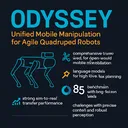
This August 2025 paper introduces ODYSSEY, a comprehensive framework for open-world mobile manipulation that integrates robotic mobility, manipulation, and real-time perception. It highlights a novel approach that uses large language models for high-level task planning and vision-language models for fine-grained action guidance, enabling robots to adaptively interact in complex environments. A significant contribution is the first comprehensive benchmark for long-horizon mobile manipulation, featuring diverse daily tasks in both indoor and outdoor settings to thoroughly evaluate embodied reasoning, planning, navigation, and manipulation capabilities. The system demonstrates strong sim-to-real transfer performance, although challenges with precise control and robust perception in real-world scenarios are identified. The paper details the coarse-to-fine task planner and a reinforcement learning-based whole-body policy, both crucial for generalizing across varied terrains and overcoming the gap between simulation and reality. Source: https://arxiv.org/pdf/2508.08240
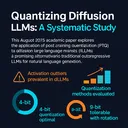
This August 2025 academic paper explores the application of post-training quantization (PTQ) to diffusion large language models (dLLMs), a promising alternative to traditional autoregressive LLMs for natural language generation. The authors conduct a systematic study to understand how existing PTQ techniques, commonly used for compressing AR LLMs, perform with dLLMs. A key finding is the prevalence of activation outliers in dLLMs, which pose a significant challenge for low-bit quantization. The research also evaluates the effectiveness of various quantization methods, bit-widths, task types, and model variants, concluding that 4-bit quantization is optimal for weight-only methods like GPTQ, while 8-bit is tolerable for weight-activation quantization, with rotation-based methods like DuQuant showing superior performance. The study ultimately aims to facilitate the efficient deployment of dLLMs on resource-constrained devices by providing practical insights into their quantization behavior. Source: https://arxiv.org/pdf/2508.14896
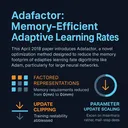
This April 2018 paper introduces Adafactor, a novel optimization method designed to reduce the memory footprint of adaptive learning rate algorithms like Adam, particularly for large neural networks. Adafactor achieves this by estimating per-parameter second moments using factored representations, specifically maintaining only row and column sums for weight matrices, thereby reducing memory requirements from O(nm) to O(n+m). The paper also addresses training instability in adaptive methods, proposing update clipping and a gradually increasing decay rate scheme for the second-moment accumulator as solutions. Furthermore, Adafactor suggests scaling parameter updates based on the parameters' own magnitudes rather than absolute step sizes, contributing to its overall efficiency and stability. Experimental results on the Transformer model for machine translation demonstrate that Adafactor achieves comparable performance to Adam while requiring significantly less auxiliary memory. Source: https://arxiv.org/pdf/1804.04235
This January 2019 academic paper addresses the common issue of poor generalization in adaptive gradient optimization methods like Adam, compared to traditional Stochastic Gradient Descent (SGD) with momentum. The authors demonstrate that L2 regularization and weight decay are not equivalent for adaptive optimizers, unlike for standard SGD, leading to suboptimal performance in Adam. They propose a simple modification called "decoupled weight decay" (AdamW), which separates the weight decay step from the gradient-based updates. Empirical evidence shows that AdamW significantly improves Adam's generalization performance on image classification tasks and simplifies hyperparameter tuning by decoupling the learning rate and weight decay factors. Furthermore, the paper introduces AdamWR, incorporating warm restarts to further enhance AdamW's anytime performance, ultimately making Adam competitive with SGD with momentum. Source: https://arxiv.org/pdf/1711.05101

This August 2025 paper introduces Oaken, a novel acceleration solution for serving Large Language Models (LLMs) that addresses the significant challenges of memory bandwidth and capacity bottlenecks inherent in batched LLM inference. Oaken achieves this through a co-designed algorithm and hardware architecture, featuring an online-offline hybrid KV cache quantization technique. This technique efficiently reduces the memory footprint and access requirements of the Key-Value (KV) cache by categorizing data into "inliers" and "outliers" using offline threshold profiling and applying group-shift quantization. Furthermore, Oaken integrates custom quantization/dequantization engines and memory management units into LLM accelerators to translate algorithmic gains into tangible performance improvements, demonstrating increased throughput and minimal accuracy loss compared to existing methods. Source: https://arxiv.org/html/2503.18599v2

This August 2025 paper introduces Pimba, a novel Processing-in-Memory (PIM) accelerator designed to enhance the efficiency of Large Language Model (LLM) serving for both traditional transformer-based models and emerging post-transformer architectures. The authors highlight that memory bandwidth is a critical bottleneck for both types of LLMs, specifically during attention operations in transformers and state updates in post-transformers. Pimba addresses this by integrating PIM technology with LLM quantization, using a State-update Processing Unit (SPU) shared between memory banks to maximize hardware resource sharing and area efficiency. The system employs MX-based quantized arithmetic within its State-update Processing Engine (SPE), which is identified as a Pareto-optimal choice for balancing accuracy and area overhead. Evaluations show Pimba significantly boosts token generation throughput and reduces latency and energy consumption compared to existing GPU and GPU+PIM systems, providing a unified and scalable solution for diverse LLM serving demands. Source: https://arxiv.org/pdf/2507.10178

This February 2025 research addresses the critical issue of training instability in Large Language Models (LLMs), which often stems from sudden, massive "gradient spikes" that can be thousands of times larger than typical gradients. The authors introduce Spike-Aware Adam with Momentum Reset (SPAM), a novel optimizer designed to counteract these spikes through periodic momentum resets and spike-aware gradient clipping, which scales down rather than zeroes out large gradients. Experiments demonstrate that SPAM consistently outperforms existing optimizers like Adam and Adafactor across various LLM sizes during both pre-training and fine-tuning. Furthermore, SPAM offers a memory-efficient version leveraging sparse momentum, enabling better performance under memory constraints compared to other state-of-the-art memory-efficient optimizers. The study highlights the detrimental impact of gradient spikes and presents an effective optimization strategy to enhance LLM training stability and resource efficiency. Source: https://arxiv.org/pdf/2501.06842
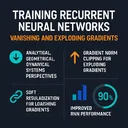
This academic paper addresses the inherent challenges in training Recurrent Neural Networks (RNNs), specifically the vanishing and exploding gradient problems. The authors explore these issues from analytical, geometrical, and dynamical systems perspectives, building upon previous work. They propose and empirically validate a gradient norm clipping strategy to combat exploding gradients and a soft regularization constraint to mitigate vanishing gradients. The research demonstrates that these solutions significantly improve RNN performance on both synthetic pathological tasks requiring long-term memory and natural language processing and music prediction problems. Source: https://arxiv.org/pdf/1211.5063