AI and the Decline of Entry-Level Employment
Feb 24, 2026
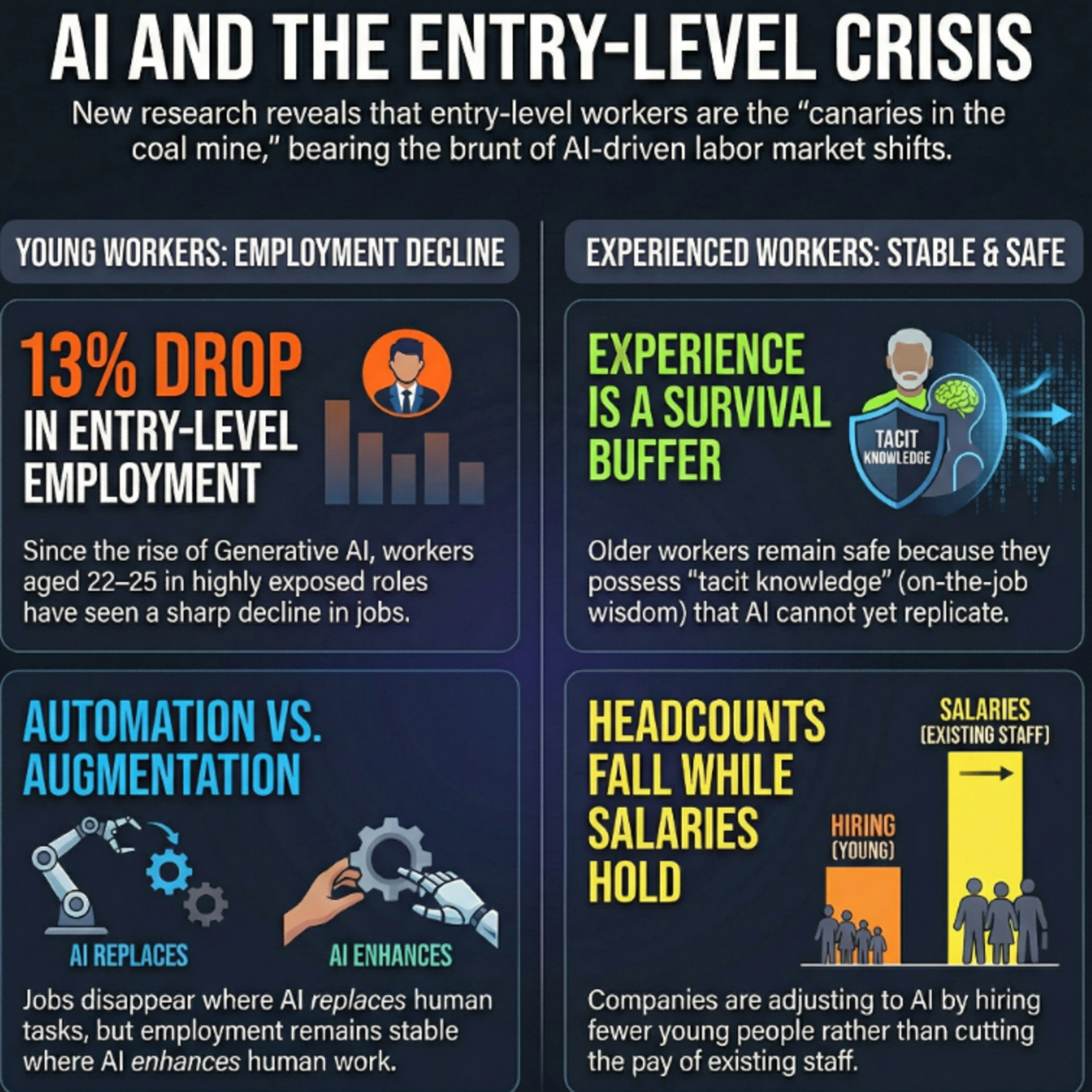
This research paper analyzes the labor market effects of generative artificial intelligence using high-frequency payroll data through mid-2025. The authors identify a 13 percent relative decline in employment for early-career workers, specifically those aged 22–25, in occupations with high AI exposure. While overall national employment remains robust, the study finds that entry-level hiring has stagnated in fields where AI is primarily used for automation rather than augmentation. These adjustments appear almost exclusively in headcount reductions rather than changes in compensation, suggesting initial wage stickiness. The findings indicate that younger workers are more vulnerable to displacement because AI often replaces the codified knowledge typically gained through formal education. Ultimately, the report provides early, large-scale evidence that the AI revolution is disproportionately impacting the start of the career ladder in the American workforce. Source: August 26 2025 Canaries in the Coal Mine? Six Facts about the Recent Employment Effects of Artificial Intelligence Stanford University and NBER Erik Brynjolfsson, Bharat Chandar, Ruyu Chen https://digitaleconomy.stanford.edu/publications/canaries-in-the-coal-mine/